

ReTHINKing Research Dissemination
Will you help us accelerate how new science gets shared?

Welcome to our 55th newsletter! As with prior newsletters, I’ve highlighted what I find to be the critical pearls within each abstract and called out my #TOPPICK(s)…and our first ever #MUSTREAD (way down near the bottom!)
But I want to begin this newsletter by asking for a favor 🙏
For the past few years I have had the honor of serving as an Associate Editor and a reviewer for the Journal of Continuing Education in the Health Professions (JCEHP). In my role an Associate Editor I serve alongside more than 20 educational research professionals from around the world, and it is work that I truly love.
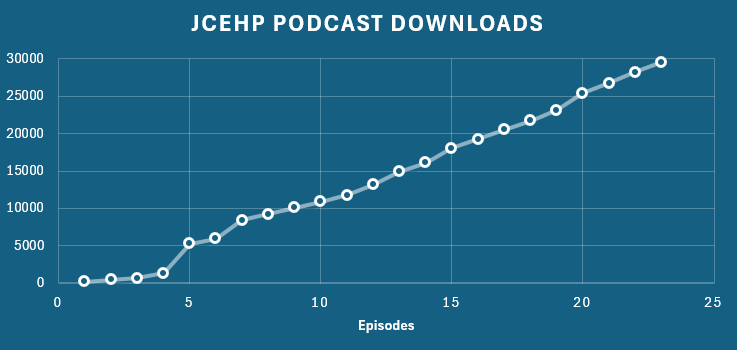
In addition to my editorial duties, more than two years ago I launched the JCEHP Emerging Best Practices in CPD podcast. In the coming few weeks/months we will be releasing our 30th episode and will have surpassed more than 30,000 downloads, averaging more than 1400 downloads per episode!
Six months ago I was asked to participate in a new JCEHP endeavor. Our goal is to expand the reach, visibility, and impact of the JCEHP across digital platforms, partner organizations, and global CPD communities.
In May of 2026 we took our first two meaningful steps.
(Admittedly there are a couple older, abandoned pages and accounts on various social media channels, that we are trying to clean up…but these are our new official accounts.)
Moving forward, there will be a coordinated effort by the TriGroup (owners of JCEHP: ACEHP, AHME, and SACME) to improve outreach and dissemination of new JCEHP publications and new JCEHP podcast episodes. And I truly think you can help too!
Here is my ask: Please follow us on LinkedIn and Bluesky…and please help us get the word out about these accounts!
…now back to our regularly scheduled programming 📺📺📺
Learning & Change Science:
Outcomes of a Foundational Sciences Daily Engagement Game in Medical Education #TOPPICK
Daily engagement games are widely used as motivational tools in applications ranging from language learning to medical licensing board preparations. In medical education, continuous engagement with basic science concepts has benefits for the understanding of complex clinical correlations and the development of adaptive learning skills. This study was designed to determine if medical students respond positively to biochemistry and genetics daily engagement games and if the games have measurable effects on learning. The study employed a quasi-experimental pretest-posttest design with voluntary participation. Response to the intervention was assessed through a post-intervention survey. Grade differences before and after the intervention were measured as learning outcome, thereby controlling for baseline academic ability. Other factors assessed were engagement with course materials and practice quizzes as well as performance in a parallel challenging course. A total of 445 students participated in four games over the course of 2 years. Student reactions were overwhelmingly positive with participation rates holding steady, first-round participants eager to participate in a second round, and participants agreeing that the game was an efficient way to prepare for exams. However, linear regression models and participant/non-participant group comparisons failed to show correlations of grade differences with game participation and/or overall course engagement. The foundational question-of-the-day games were well-received by students and proved to be popular additions to the curriculum. While the data do not support the hypothesis that game participation improves learning outcomes, it is evident that participation also does not negatively impact students' performance.Building effective hybrid learning environments in medical education: tips for educators #TOPPICK
With the increasing popularity of hybrid medical education, this ‘Last Page’ highlights practical tips for setting up and managing a hybrid classroom. The authors explain the advantages of both virtual and in-person classes as well as address the unique challenges of running a hybrid classroom. Hybrid learning allows students to synchronously attend sessions in the classroom and/or through a virtual platform. Especially in undergraduate and graduate medical education settings, it can offer advantages of both virtual and in-person classes when designed and executed well. However, running a hybrid classroom poses unique challenges that necessitates careful and thoughtful planning.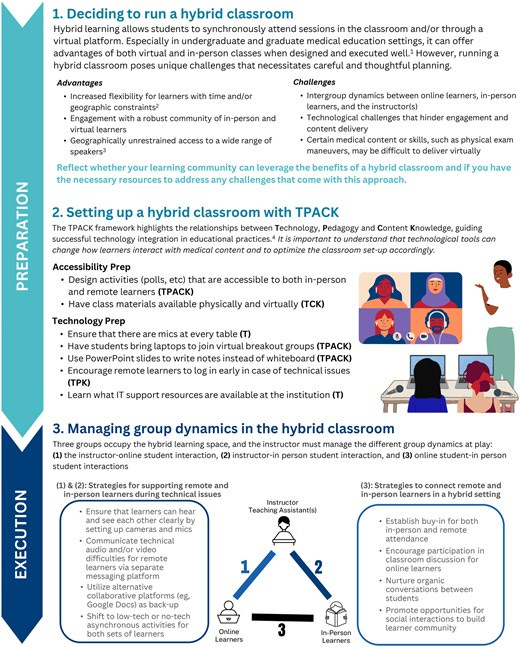
A Sound Education: A Qualitative Study of the Role of Podcasts in Postgraduate Medical Education
The rise of smart technology has driven increased use of podcasts in medical education due to their accessibility, flexibility, and capacity for rapid dissemination of current information. Existing literature, predominantly North American and undergraduate-focused, is insufficient to understand podcast use and integration into UK postgraduate medical education. Ten Internal Medicine Trainees from the East Midlands region were interviewed online using semi-structured interviews. Recordings were transcribed and analysed using Interpretative Phenomenological Analysis. Ethical approval was obtained. Four themes emerged: Self-directed Learning, Time Efficiency, Relaxed Learning Environment and Access to Experts. Podcasts have been used informally to address self-identified knowledge gaps and personalise study schedules. Trainees valued concise, high-yield content and the ability to learn while multitasking with other activities such as commuting or cleaning, which was seen as productive. Podcasts user-friendly, enjoyable format created a relaxed learning environment. Additionally, podcasts offered valuable access to expert speakers, modelling clinical reasoning skills, and fostering connections with senior doctors. Trainees actively use podcasts as informal learning tools to supplement their education. The flexibility and enjoyment offered by podcasts support self-directed, continuous learning. Despite regular use, and evidence of their integration internationally, they remain absent from the regional speciality school curriculum. Podcasts are a valued but under-recognised educational resource amongst postgraduate trainees. There is demand for their formal inclusion in Continuing Professional Development (CPD) and for educator-endorsed recommendations tailored to training stages.Development of a Case-Based Learning Framework for Medical Education: A Scoping Review
Case-based learning (CBL) is widely used educational strategy in medical education for assessing students’ knowledge and clinical skills. Despite its benefits, there is an ongoing debate regarding best practices for developing cases. This study aims to synthesize current literature on CBL to develop a framework to support the creation of cases for theoretical and clinical courses. Thirty-five articles were in included in the final review. The included studies covered a range of disciplines, including medicine, nursing, physiotherapy, speech-language pathology, and interprofessional education. Studies were primarily from high-income countries with limited representation from low- and middle-income countries. A framework for CBL was developed encompassing five core components: content, structure, attributes and strategies, process and strategies, and outcomes. The proposed model facilitates student engagement, fosters reflective practice, and incorporates technological innovation to enhance learning. This framework offers practical guidance for educators in medical education seeking to design, adapt, and implement CBL approaches that are aligned with competency-based medical education. Future research may want to explore the application of CBL in the development of video simulated cases.Coaching and its effectiveness in organizations: Reflecting on a decade of research, looking forward to future challenges
This article reflects on the publication of the meta-analysis by Jones, Woods and Guillaume (2016) on the effectiveness of workplace coaching in the Journal of Occupational and Organizational Psychology. The authors look back over ten years of research since the publication and consider the impact of the article and its place in the wider development of the coaching literature during that period. Three key themes are revisited in the discussion of the literature: (1) the need for theoretically informed and grounded research into workplace coaching; (2) development of research designs and outcome specification in studies of coaching effectiveness; (3) evidence-based understanding of the practice of coaching, including the efficacy of different techniques and approaches. Future implications for research into workplace coaching are also explored.
genAI/LLMs:
AI-induced never-skilling in medical education #TOPPICK
The integration of artificial intelligence (AI) into medical training is accelerating faster than the educational frameworks designed to govern it. This Perspective identifies a risk that has received insufficient attention: that trainees who rely on AI during the early formative years of clinical education may fail to develop the foundational reasoning skills that safe, independent practice requires. We refer to this as ‘never-skilling’, distinguishing it from deskilling in experienced clinicians and from mis-skilling, in which uncritical acceptance of AI errors leads trainees to internalize flawed clinical knowledge as fact. Although direct evidence from medical training is absent, the concern is grounded in established learning theory and supported by early empirical signaling from nonclinical settings. AI is not inherently harmful to learning; its educational impact depends on how and when it is introduced. We propose a three-phase competency-protective framework: establishing AI-independent baseline competency, building critical calibration through structured pedagogy, and integrating AI under supervision in medical training. This is a pedagogy research agenda that requires further empirical investigation to ultimately inform future policy recommendations.
AI for Assessment in Medical Education in Post LLM Era: A Scoping Review
Artificial intelligence (AI) has supported assessment in medical education for decades through automatic item generation and natural language processing (NLP), but these pre-large language model (LLM) approaches were narrow, tool-intensive, and required substantial expert oversight. The release of ChatGPT in November 2022 marked a paradigm shift, enabling rapid generation and evaluation of assessment content. This scoping review aimed to map post-November-2022 evidence on the use of AI, particularly LLMs, in designing and evaluating assessments in medical education. Twenty-five studies met the inclusion criteria. Two dominant application domains emerged. First, AI-assisted generation and evaluation of multiple-choice questions (MCQs) across medical disciplines demonstrated efficiency gains, with acceptable difficulty indices in some examinations. However, consistent limitations were identified, including shallow reasoning, weak distractors, factual inaccuracies, and reduced discriminatory power, necessitating expert review. Second, the use of NLP and LLMs for analysis of narrative feedback showed increasing maturity, enabling theme extraction, quality scoring, risk prediction, and dashboard-based visualization to support formative assessment. Overall, the literature supports AI as an assistive rather than substitutive tool in assessment. Future research should move from feasibility to assurance by standardizing human-in-the-loop workflows, implementing mandatory post-exam psychometric analyses, developing multimodal assessment pipelines, and conducting multi-institutional trials to evaluate educational impact.Harnessing ChatGPT for Medical Education: A Narrative Review
Artificial intelligence (AI), particularly large language models (LLMs) such as ChatGPT, is rapidly transforming medical education by introducing innovative, learner-centered approaches. ChatGPT, a generative AI tool, has demonstrated significant potential in enhancing teaching, learning, assessment, and curriculum design. This narrative review provides a comprehensive overview of the applications, benefits, and limitations of ChatGPT in medical education. ChatGPT serves as a valuable tool for medical educators by facilitating the generation of teaching materials, assisting curriculum development, and supporting assessment and feedback. For learners, it functions as a virtual tutor, promoting self-directed learning through interactive explanations, clinical simulations, and self-assessment tools. Its ability to provide personalized, real-time, and multilingual support makes it particularly relevant in diverse and resource-constrained settings. Ongoing digital education initiatives further enhance the applicability of such technologies, improving accessibility and scalability of learning. However, several limitations exist, including the risk of inaccurate or misleading information, potential bias, concerns regarding academic integrity, data privacy issues, and over-reliance affecting critical thinking skills. In conclusion, ChatGPT represents a promising adjunct in medical education, offering opportunities to enhance learning experiences and educational efficiency. Nevertheless, its integration should be guided by appropriate oversight, ethical considerations, and active involvement of educators to ensure safe and effective use.Agent-Based Improvement of Multiple-Choice Question Quality in Medical Education
High-quality multiple-choice questions (MCQs) are essential for medical education, but costly to design. Large language models (LLMs) can generate MCQs automatically, yet their outputs often fail to meet core quality criteria. This paper presents a self-optimizing multi-agent approach that refines LLM-generated MCQs by aligning them with predefined quality standards. Expert evaluation shows significant improvements for question stems, producing clearer and more answerable items. For answer options, however, improvements remain inconsistent. The findings indicate that automated refinement by self-optimizing agents can reduce manual workload for educators and accelerate the creation of high-quality question stems, while highlighting open challenges for future research.Conversational Artificial Intelligence in Medical Education: A Scoping Review
Conversational artificial intelligence (AI), encompassing chatbots and large language models (LLMs), is rapidly emerging in the sphere of medical education as a dynamic tool for interactive learning. By generating realistic dialogue, simulating patient encounters, and providing adaptive feedback, these systems create new possibilities for learners to practise communication, clinical reasoning, and decision-making in a flexible and accessible way. Yet, despite increasing enthusiasm, evidence regarding their educational value remains fragmented. This scoping review examines the existing literature on conversational AI in undergraduate medical education, focusing on three key domains: educational utility, technology usability, and fidelity. A comprehensive search was conducted across PubMed, Scopus, and Web of Science in August 2025. After deduplication, 496 unique studies were screened, and 20 met the inclusion criteria. Across the literature, conversational AI demonstrates considerable potential to enhance engagement, support self-directed learning, and expand access to experiential practice. Learners generally view these systems as intuitive and motivating, and many studies suggest benefits for clinical reasoning and communication training. However, limitations in reliability, realism, and technical accuracy persist, and outcome measures remain inconsistent. Few studies assess the impact of response latency or the long-term transfer of skills to clinical settings, and methodological rigour is often modest. Overall, conversational AI appears to be a promising adjunct to traditional medical teaching rather than a replacement. Its value lies in scalability, interactivity, and adaptability, but effective integration requires thoughtful design, validated evaluation frameworks, and ongoing human oversight.Effectiveness of AI-enhanced virtual patients for psychiatric interview training in health professions education: a meta-analysis
Artificial intelligence (AI)-enhanced virtual patient simulations are increasingly used in health professions education to improve clinical communication and diagnostic reasoning. However, the effectiveness of these technologies for psychiatric interview training has not been systematically quantified. This study aimed to systematically review and meta-analyze the existing literature evaluating the impact of AI-enhanced virtual patients on psychiatric interview performance, knowledge acquisition, and learner confidence in health professions education. Studies were included if they evaluated AI-enhanced virtual patient simulations for psychiatric interview training among medical students, psychiatry residents, clinicians, or other health professions trainees. 10 studies met the inclusion criteria and were included in the final analysis. The studies involved approximately 450 participants, including medical students, psychiatry residents, clinicians, nursing students, and psychology trainees. AI-enhanced virtual patient interventions included conversational AI systems, virtual human simulations, large language model-based simulated patients, and AI-virtual reality training environments. The pooled analyses indicated improvements in psychiatric interview performance, knowledge acquisition, and learner confidence following AI-supported virtual patient training. Subgroup analysis demonstrated positive educational outcomes across both student and clinician populations. Risk-of-bias assessment revealed variable methodological quality across studies, with several pilot and non-randomized designs. AI-enhanced virtual patient simulations appear to be effective educational tools for improving psychiatric interview training in health professions education. These technologies provide scalable and standardized simulation environments that support communication skill development, diagnostic reasoning, and learner confidence. Although the findings suggest promising educational benefits, further large-scale randomized controlled trials and standardized outcome assessments are needed to confirm the long-term educational impact of AI-supported virtual patient training in psychiatry.
#socialQI/Social Media:
From Publication to Dissemination: Using Social Media to Extend Scholarly Reach and Impact #TOPPICK
In academic medicine, publication has often been treated as the endpoint of scholarship. In today’s crowded digital environment, however, publication alone does not ensure that important work will be seen, discussed, or used. This commentary argues that dissemination is an essential part of scholarship and that social media, when used thoughtfully, can play an important role in extending the reach and visibility of scholarly work. The authors make three central arguments. First, increasing the visibility of scholarship is a legitimate scholarly aim, not merely a marketing exercise, because greater visibility can help scholarship reach relevant audiences, stimulate engagement, and generate evidence of dissemination that complements traditional markers of impact. Second, concerns about self-promotion are understandable but should be reframed. Sharing one’s work is more appropriately viewed as an act of scholarly dissemination and knowledge translation than as self-congratulatory or performative. Third, the authors offer practical, evidence-informed strategies for promoting scholarship on social media, including identifying target audiences, making scholarship easy to find and share, choosing platforms strategically, translating papers into accessible take-home messages, using visuals, posting more than once, involving coauthors and institutions in dissemination, using hashtags and at-mentions strategically, and documenting evidence of reach and engagement. The authors also note that the social media landscape has changed substantially in recent years, suggesting the need for updated research on newer and evolving platforms. Overall, they contend that helping scholarship reach the audiences who may benefit from it is not peripheral to academic work, but an important component of scholarly dissemination in contemporary academic medicine.Learning via short videos impairs memory accuracy and reduces brain synchrony #TOPPICK (Also see the #MUSTREAD reTHINKing article below!!!)
The rapid rise of short videos (SVs), particularly social media-style formats characterized by rapid switching and fragmented content, has led to their increasing integration into learning environments. However, their efficacy and neurocognitive impact remain contentious. The present study examined whether SVs are superior or inferior to long videos as tools for learning and memory. Across three experiments, memory performance and forgetting rate were assessed under both incidental and intentional encoding conditions, and inter-subject correlation (ISC) analysis was employed to investigate neural response patterns during SV viewing. Behaviorally, participants learning with SVs showed significantly lower immediate memory accuracy across encoding conditions and exhibited a higher rate of forgetting when explicitly instructed to remember. At the neural level, ISC analyses revealed that SVs elicited reduced neural synchrony in key brain regions supporting visuospatial attention, episodic memory, and cognitive control, including the superior parietal lobule, precuneus, and middle occipital gyrus. In contrast, SVs evoked higher synchrony in temporal and frontal regions associated with bottom-up attentional processing. Furthermore, functional connectivity analyses indicated that SVs weakened coupling between visual, attentional, and cognitive control networks. Together, these findings suggest that the fragmented and rapidly switching nature of typical social media short videos enhances bottom-up attentional capture at the expense of top-down cognitive processes critical for deep learning and long-term memory consolidation. This study provides converging neurobehavioral evidence suggesting that SVs viewing in social media contexts is associated with reduced neural synchronization and poorer memory performance.
The Multifaceted Role of Social Media in Pain Medicine: Innovation, Education, Patient Engagement, and Challenges
This article reviews the expanding role of social media in pain medicine, examining its impact on professional education, innovation dissemination, and patient engagement, with a focus on low back pain-related content and the need for training clinicians to evaluate online health content. Social media platforms such as YouTube, Instagram, TikTok, Facebook, and Twitter now play a central role in pain medicine for education, professional networking, patient engagement, practice promotion, and the dissemination of innovations in pain management. Within pain medicine, particularly in the context of prevalent conditions such as chronic low back pain, these platforms directly influence patient beliefs, expectations, and treatment decisions. A growing number of patients with limited access to specialist care rely on social media as a primary source of clinical guidance, raising concerns about health equity and the quality of information encountered. Research demonstrates that structured social media-based pain education can improve pain neuroscience understanding and self-management, while analyses of platform content reveal that a significant proportion of videos addressing pain-related topics are inaccurate or misaligned with established clinical guidelines. Misinformation about pain medications and opioid treatments circulates widely, and algorithmic recommendation systems may amplify engagement-driven content over accurate content. Financial conflicts of interest are frequently undisclosed in clinician-produced posts, and patients generally cannot distinguish reliable from unreliable material. Social media presents substantial opportunities and risks for pain medicine. Its low cost, speed, and wide reach can enhance knowledge sharing, support patient communities, and accelerate dissemination of clinical innovations. However, these same qualities facilitate misinformation, unregulated content, and ethical challenges. To maximize benefit and minimize harm, clinicians and healthcare institutions should produce accurate, evidence-based content; follow professional guidelines; direct patients toward reliable sources; and incorporate digital and social media literacy into formal training curricula.
General Themes
Screen-based simulation assessment for emergency medicine learners: a rapid review
Simulation has played a vital role in training medical professionals. The COVID-19 Pandemic has highlighted the need for physically distant educational assessment methods. Screen-based simulation (SBS) demonstrates one alternative to traditional in-person simulation methods to assess learners clinical reasoning and communication skills. This study aims to compare in-person simulation to SBS as assessment methods in Emergency Medicine (EM). 751 articles were identified based on title and abstract. Sixty articles were selected for retrieval, of which seven pilot and small population studies were included. Study participants varied based on experience level. Three key findings were derived from these studies. First, SBS is comparable to in-person simulation as a clinical competence and communication skill assessment method when evaluated by independent raters and mock EM oral board examination scores. Second, SBS is capable of discerning EM learners by educational level given SBS/serious game mean clinical score clustering. Lastly, various SBS software demonstrated strong participant interest across the EM learner spectrum through subjective exit questionaries. Current research regarding SBS as an assessment method for EM learners is severely limited as demonstrated by low number of included studies and small populations. Even so, SBS shows promise as a possible alternative and/or supplement to traditional in-person simulation to assess clinical reasoning/communication skills and discern learners by educational level. Further large-scale studies are required to establish the validity of SBS as an assessment method.Building capacity for change: developing an evidence-based competencies framework to power champions
Champions play a critical role in driving innovation, advancing evidence-based practice (EBP) and supporting its implementation across diverse healthcare settings. This paper describes the development of a Champions’ Competencies Framework outlining the knowledge, skills, behaviours, attitudes, roles and responsibilities required of champions. Informed by existing literature, the framework is intended for members of the global Best Practice Champions Network (BPCN), including nurses, health and social service providers, volunteers and students. The framework was developed in three phases. Phase I involved a grey literature scan to identify sources describing champions’ competencies. Phase II followed Arksey and O’Malley’s scoping review methodology. Phase III involved thematic synthesis and consultation with external partners to refine the framework. 63 studies met the inclusion criteria and were analysed. Seven core competency roles were identified: leader, advocate, collaborator, communicator, content and context expert, facilitator and mentor, supported by 34 performance statements. Champions are key drivers of EBP in healthcare. This framework advances understanding of champion competencies and supports skill development, while enabling organisations to design competency-based training and tailor context-specific strategies to enhance the uptake and sustainability of EBPs.
ReTHINK Provoking Publications:
Twelve Tips for Recognizing and Addressing the Adverse Effects of Medical Education Interventions: Tutorial #TOPPICK #MUSTREAD
"First, do no harm" is a fundamental principle in health care, and clinical researchers carefully monitor adverse drug reactions to ensure patient safety. However, educational researchers and clinical educators rarely apply the same level of scrutiny to potential adverse effects arising from their own interventions. This reflects a persistent misconception that educational interventions are inherently harmless, an assumption that warrants critical examination. In this tutorial, we highlight the underrecognized concept of adverse effects in medical education by introducing 12 representative educational adverse effects and offering corresponding tips for mitigating them. These include the Dunning-Kruger effect, in which increased confidence does not align with actual competence; the undermining effect, whereby external rewards reduce intrinsic motivation; spoon feeding that stunts independent learning; cognitive overload resulting from excessive information delivery; patient dehumanization when education prioritizes technical proficiency over empathy; critiques of outcome-based medical education that may overemphasize measurable competencies at the expense of holistic professional development; and the expertise reversal effect, in which instructional strategies beneficial for novices become counterproductive as expertise grows. Additional adverse effects include compromised psychological safety despite formal safeguards, authority and confirmation biases that reinforce outdated practices, developer bias in intervention evaluation, the Hawthorne effect influencing observed behavior, and concerns that overreliance on generative artificial intelligence may hinder the development of critical thinking and metacognitive skills. To better understand the nature of these adverse effects, we categorize them into three overarching domains. Cognitive and psychological adverse effects occur within the learner. Structural and cultural adverse effects result from features of the educational environment. Methodological and evaluative adverse effects arise from how educational interventions are designed and assessed. While these domains overlap, they provide a practical framework for identifying how well-intended educational strategies may lead to harm. Some may argue that these phenomena represent unintended consequences rather than adverse effects. However, the term unintended consequence presumes that sufficient effort was made to anticipate and manage possible effects, an assumption that may not always hold in medical education. We argue that educators and educational researchers should explicitly recognize adverse effects, critically evaluate educational interventions, and adopt mitigation strategies with a level of rigor comparable to that applied in clinical research to better protect learners and improve the quality of medical education.
As always, don’t forget to review and subscribe to our JCEHP podcast: Emerging Best Practices in CPD.